Post Disclaimer: While this is about my experience with the recent Peruvian elections, I want to clearly state that I have no position on Peruvian politics. As a Peace Corps Volunteer, I am here to work with the community and promote friendship between Peruvians and Americans (see more in the PC & YD section). I am not in Peru to intervene in politics.
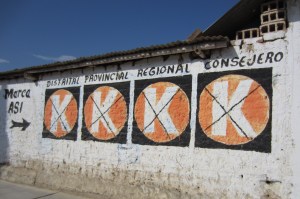
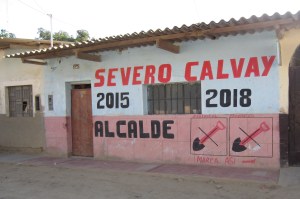
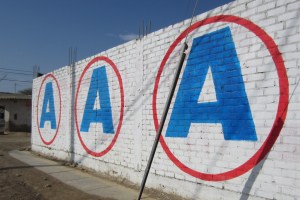
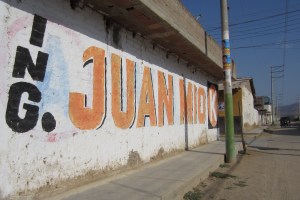
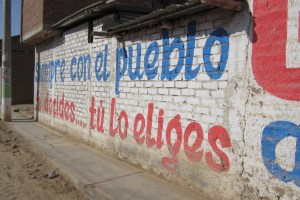
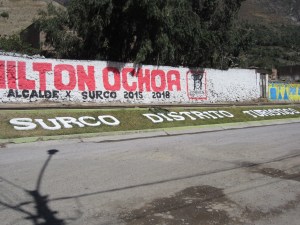
After a long day of flights, we had another hour or so to go by bus to get to the retreat center we stayed at our first weekend in Peru. Though it was dark, and I wanted to sleep, I was overcome with curiosity and intently stared at everything we passed as we drove. All along the streets I noticed walls painted with slogans, symbols and peoples’ names. Every now and then I would see the words “presidente” or “alcalde” next to the years “2015” “2016” and even some dates that had passed. It was in those first few hours in Peru that I was exposed to Peruvian Politics.
Over the next few weeks I would learn that we were in an election year for the local governments (Regional President, Provincial Mayor, District Mayor, and a variety of other positions).
And, over the next few weeks, I would be exposed to countless political ads, all with their own charm.
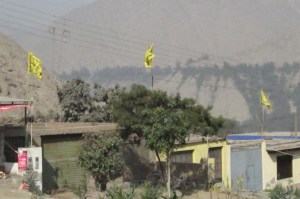 One night during training, I heard a parade outside of our house and watched from afar as people walked up and down the only street into and out of our neighborhood. The next morning, I woke up to find yellow flags all over the neighborhood and walls covered in yellow paint, with the candidate’s name and slogan.
Since then, I’ve seen:
- TV ads
- Posters (on light poles, on houses, on moto-taxis)
- Billboards
- Many, many walls painted
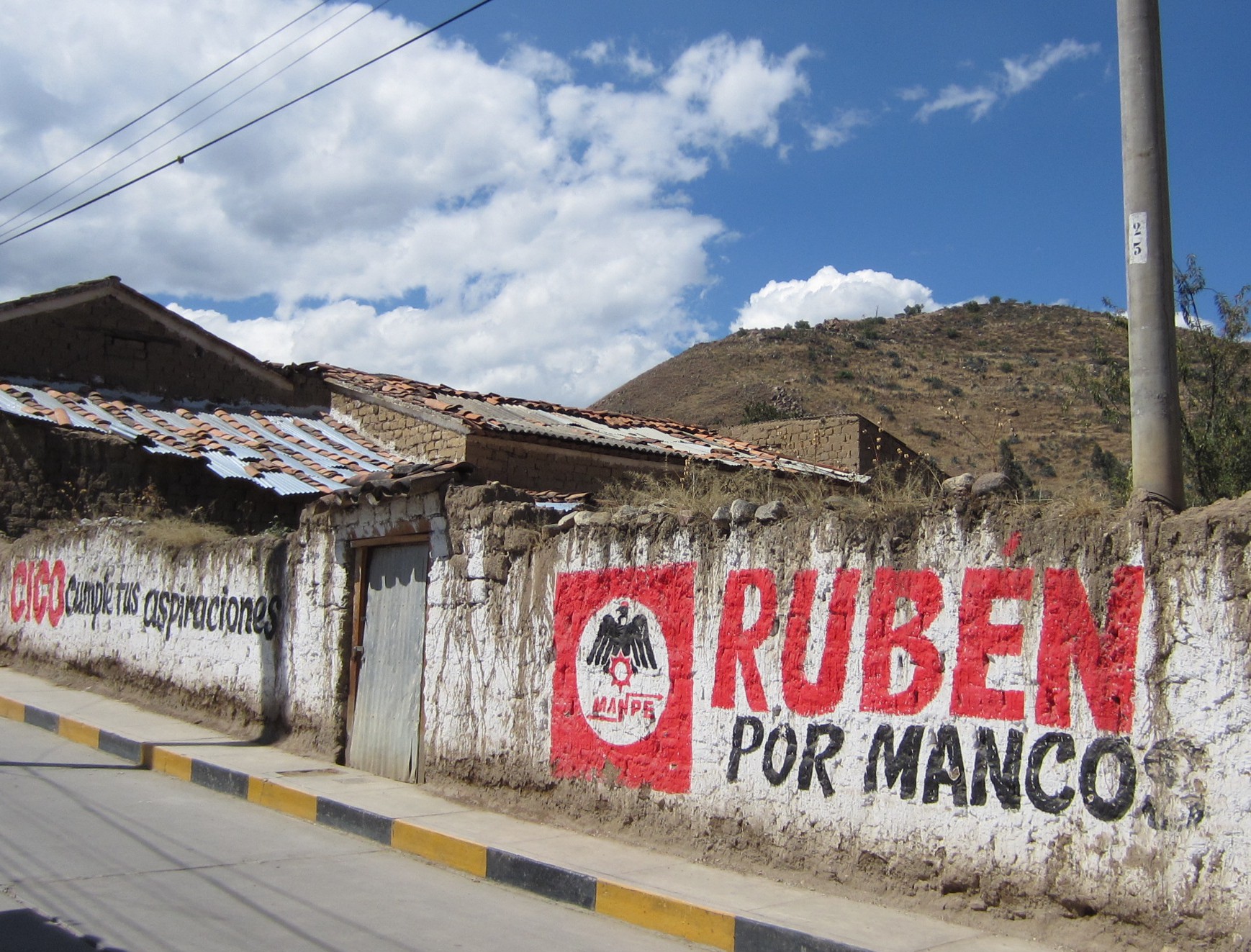
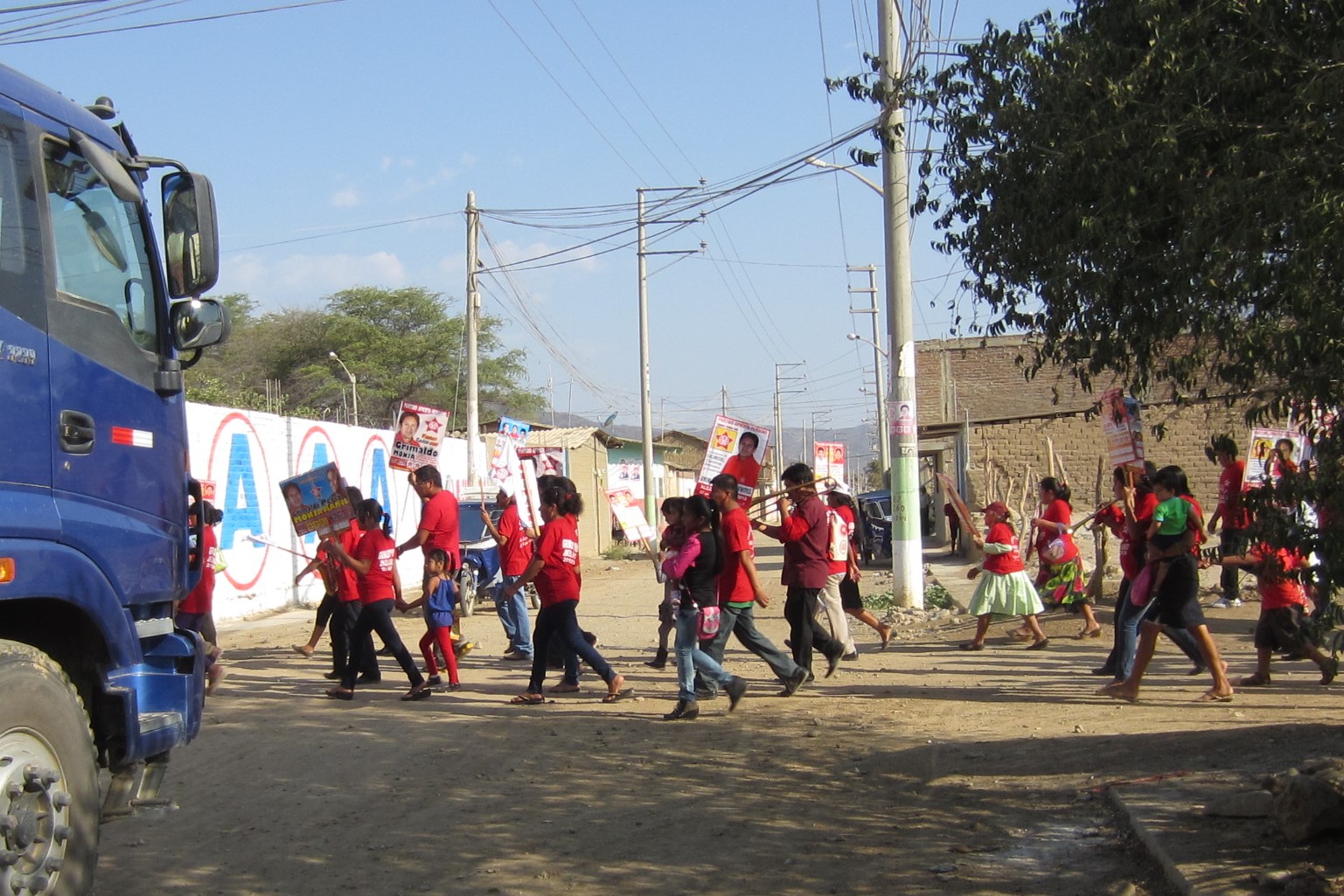
- Parades and rallies (from afar of course, or played in my house on video)
I’ve heard:
- Cars driving around with large bullhorns telling people the town needs their candidate
- The loud rallies that are at least a 10 minute walk away, going on into the wee hours of the night as I try to sleep
- The fake cannons that are shot off during these rallies
Yesterday, it all came to a close and last night all of the candidates learned whether or not their campaigning worked and if they would have a leadership position come 2015.
October 5 (which also happened to be a Sunday), all Peruvians were required to return to their place of registration to vote (absentee voting isn’t a thing, unless you’re in another country). Estimates have it that more than 20,000 people flocked to Olmos to cast their vote in the public schools. As the sun faded, rumors were swirling about who had won. I listened to my family gossip, eager to learn about the culture associated with voting, but was sure to keep my mouth shut. As the darkness crept to all corners of Olmos, so did the news of who won.
Here’s what I’ve learned about Peruvian elections:
- All Peruvians, age 18 to 70, are required to vote
- It’s difficult to transfer voter registration to a different city, so often Peruvians have to return to the town they were in when they were 18. Example: My host sister, despite growing up in Olmos, lived in Pisco when she turned 18 and is thus registered to vote there.
- If Peruvians don’t vote, they have to pay a fine. My understanding is that this is S/. 100, or about $35.
- The sale and consumption of alcohol is illegal for 48 hours during elections. Beginning at 8AM Saturday and ending at 8AM Monday, no one, including tourists or other non-Peruvian citizens, could buy or drink alcohol.
- Large gatherings are prohibited the day of the election.
- The public schools were closed both Friday and Monday.
Now that local elections are over, I’m sure people will shift their focus to the Presidential elections of 2016…
 Brittany McGee
Definitely something for all Americans to think about. Get out and vote.
Reblogged this on 720o.