Part of the Christmas tradition in El Ingenio is the dance called “Los Negritos.” I haven’t quite figured out where the name originated from or if the dance that they perform comes from Afro-Peruvian culture, but that’s really not the point.
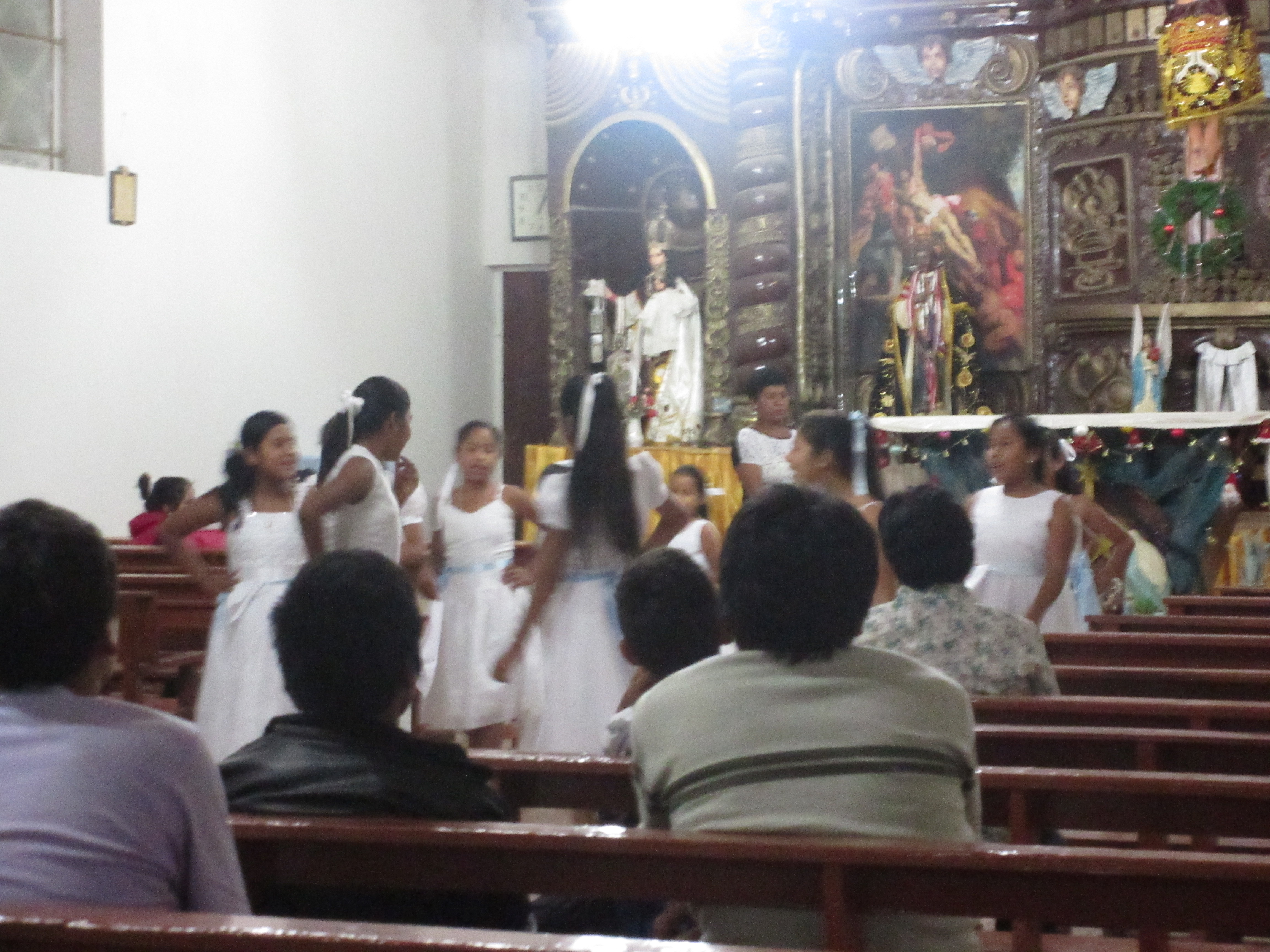 At 12:30am Christmas day, a group of dancers began in the Plaza and danced into the Catholic Church. There, this group of school age girls performed the traditional dance while singing. This went on for a good while.
The next day, those students and another group traveled around the district, dancing in houses, on streets, in nearby plazas, and at the annex churches. The second group, filled with both young children and older adults, performed several times a day until the night of the 26th.
The morning of Friday, the 26th, the dancers performed in my host brother-in-law’s parents’ house, where neighbors and family gathered to watch. They brought with them two replicas of the baby Jesus which they placed at the family’s nativity scene. They chanted, sang, and danced for almost an entire hour. After 20 minutes, they took a break and the family served Panettone, soda, and beer (to the adults). Once everyone was nourished, they held a dance competition, and the family offered prizes to the best dancers.
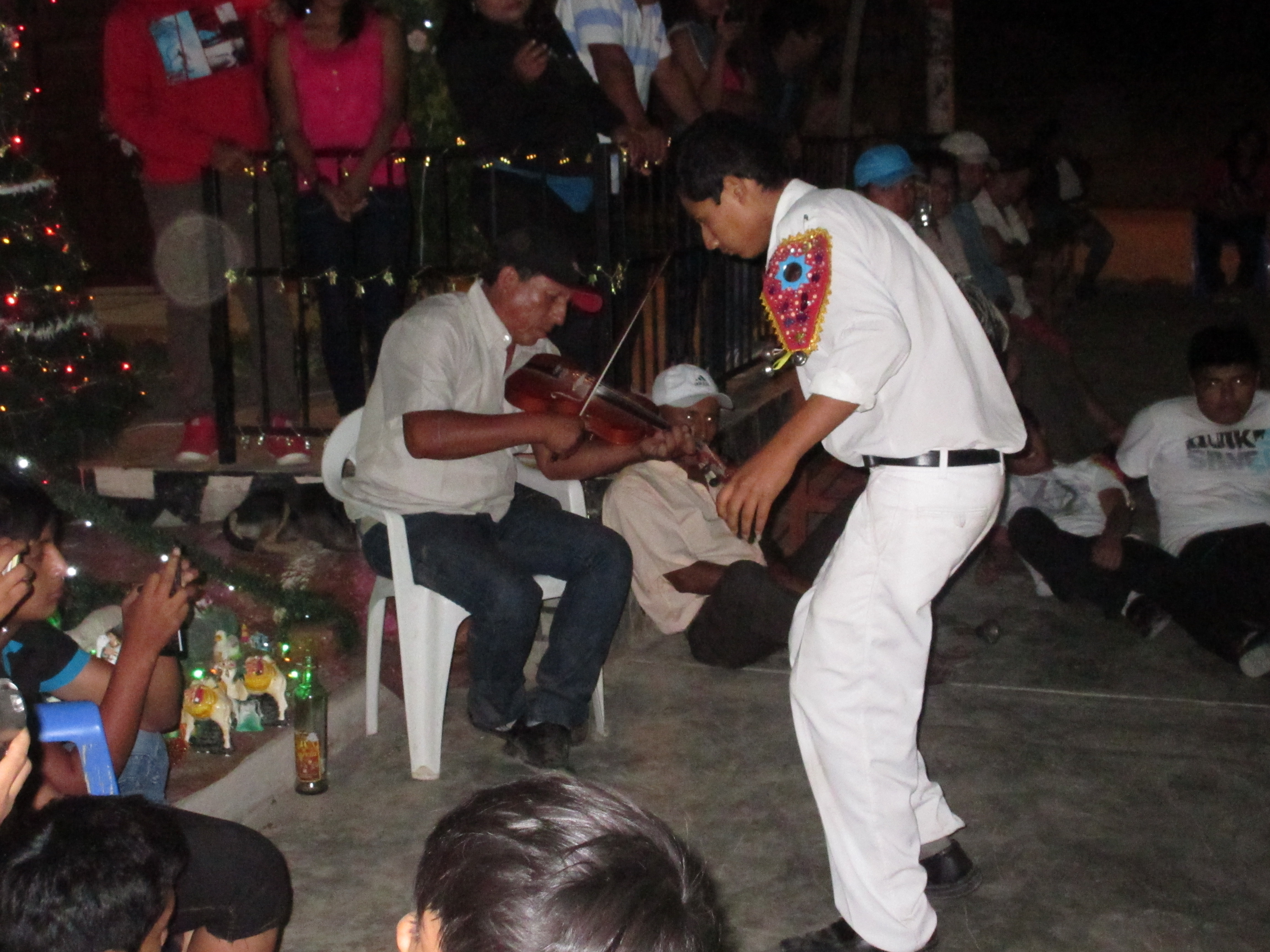 Later that night, in the plaza of one of the annexes, the dancers gathered to perform for a crowd. This dance was much grander than the one in the house and the dancers performed for much longer.
People formed drinking circles as they watched the dancers. After the performance, people served soup, pasta and chicha morada (a purple corn-based drink) while the drinking continued. The coordinators called out all the names of people who had donated and fulfilled their donations, and those who promised to donate and didn’t fulfill them. As everyone finished eating and the announcements were over, music began and a few people danced (okay, it was really just the group of people I was with who were dancing).
As I witnessed this tradition, I reflected on how Christmas in Peru (or at least where I was) is very community oriented and filled with customs. It amazed me how the community pooled together to sponsor these dancers and that these dancers felt it was their duty, their responsibility to continue the tradition. Though they spent hours performing, dancing “Los Negritos” for the community was a source of pride, for those young and old.
 Brittany McGee