The sun was radiating despite it being July 24th and the middle of the Southern Hemisphere’s winter. The teachers from Julio Ponce and I took refuge in the limited shade provided by the church’s concrete fence. We talked, joked and waited impatiently for the day’s events to begin.
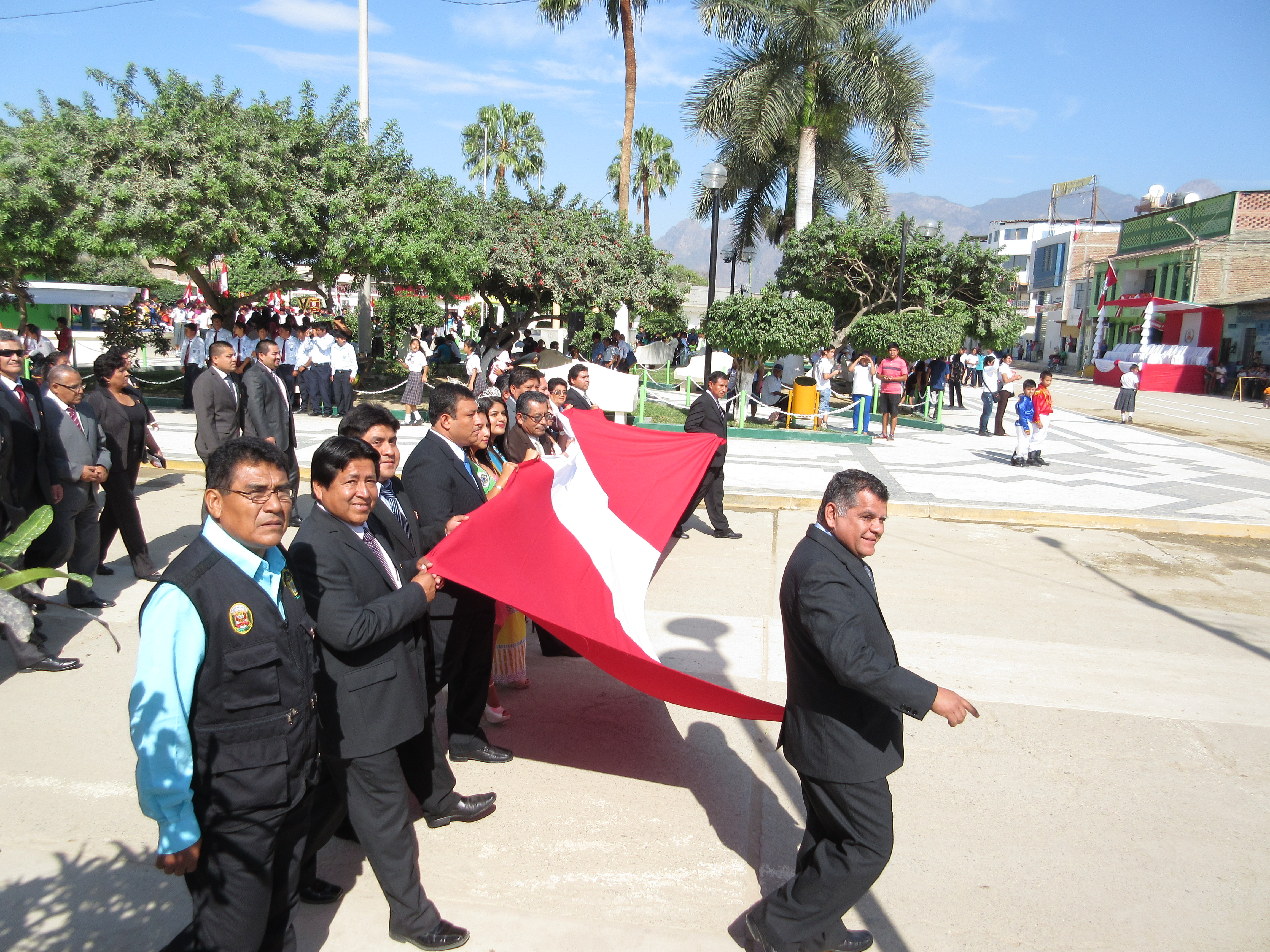 Much of the town had gathered for the Municipality’s Fiestas Patrias celebration and we were all crowded in the main plaza. The event began with the municipality staff marching with a small band around the square and continued with a recounting of Peruvian history, the events leading up to and important players in the country’s fight for independence from Mother Spain. This second part seemed to drag on, and on, and on; so much so that you could feel the growing impatience in the air.
Finally, it was time to move on—a parade of sorts featuring all the area schools, government entities, and business groups. The schools each selected a few students to represent them. Many of the schools had dressed these representatives in costumes showcasing the various cultures of Peru—traditional Inca dresses, Amazon tribal wraps, and Spanish influenced formal wear. Behind the students were the key staff- principals, disciplinary team, etc. And then the rest of the teachers, dressed in suits, followed. The parade lasted only the length of one side of the square—the length that passed in front of the municipality. There was a giant stage set up, with seats for the Mayor and other key municipality and community players, including Miss Olmos and Miss Limon, who were crowned during the town’s anniversary in June.
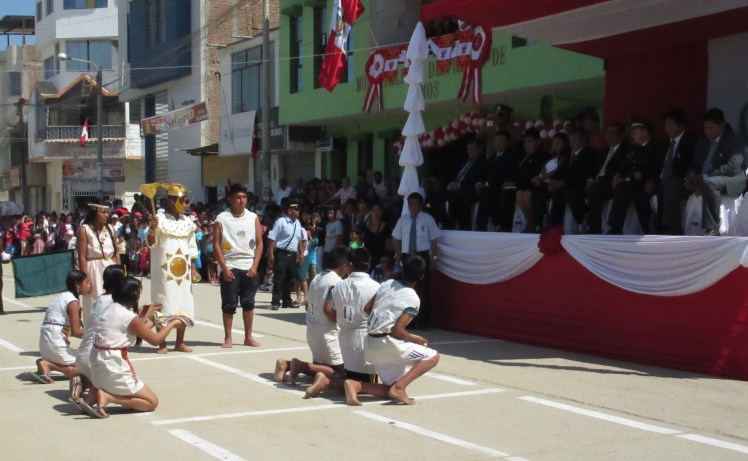
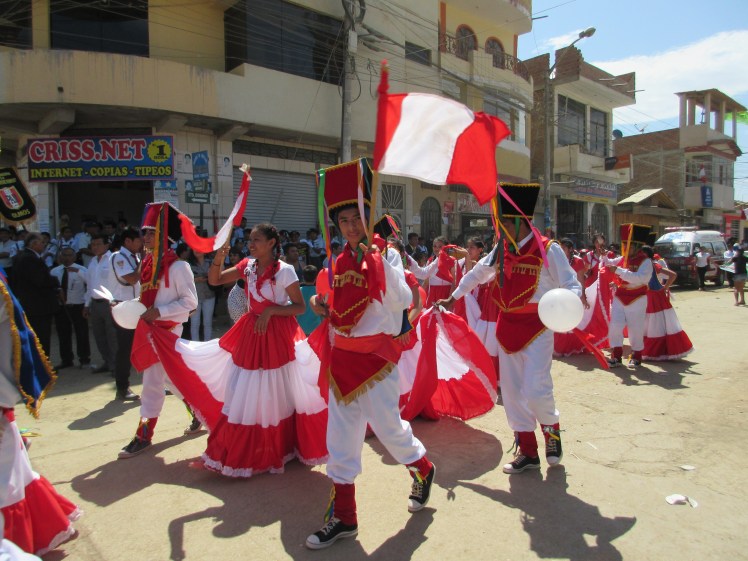
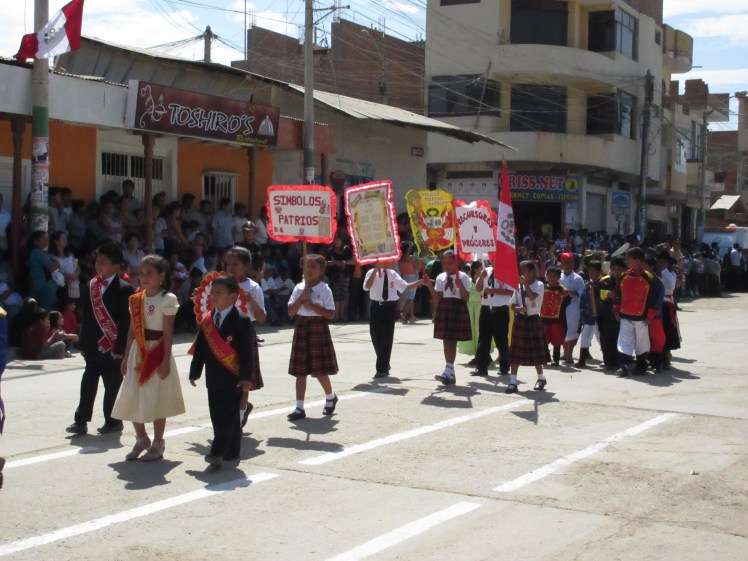
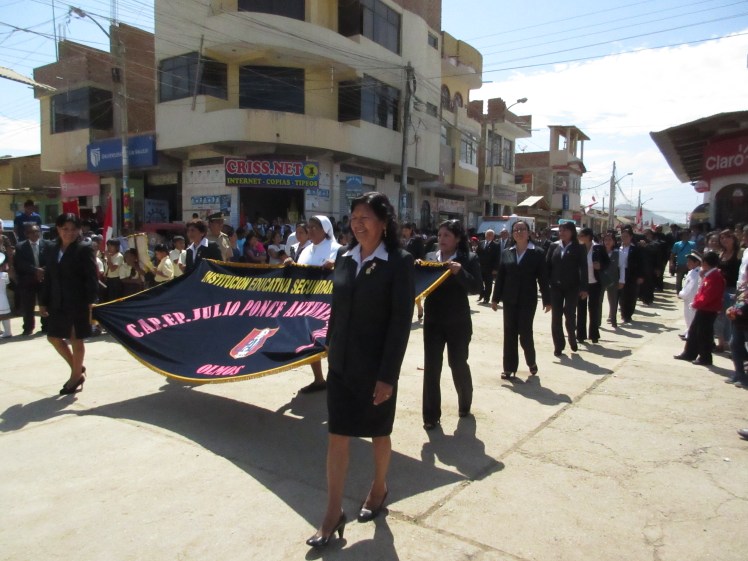
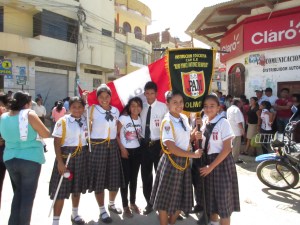 The parade seemed to go on for an eternity, though that could just have been the heat making it feel that way. After the teachers at Julio Ponce had paraded by, many of them went to a restaurant to continue their own celebration. While I had walked with them, I stuck around to see the rest of the event. Once all of the schools, the fire department, health center staff, association of agriculturists, etc. had finished, almost 45 minutes later, the marching competition began. This was the real reason many in the town had come out.
In school, the students learn how to march as the military does. The Peruvian military was taught how to march by the German military in the 1930s, pre-World War II. Each year for Fiestas Patrias in Olmos, the municipality hosts a marching competition and each school sends a team of 11 or so.
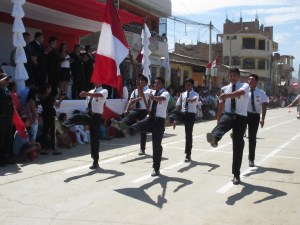 The competition began with the students in primary school, marching again the length of the square that passes the municipality. The judges were all sitting above in the stage. As the students marched, several teachers would walk along them shouting reminders and telling them if they weren’t in sync. The competition was fierce.
Finally came the time for the students from Julio Ponce to march, many of whom I work with each week. I had been watching them practice for over a month, and that practice definitely paid off. They were almost perfectly in sync as they proceeded down the street. Their faces displayed sheer focus as their arms swung forward and back. They ended up winning second place, out of at least 10 secondary schools.
For the remainder of the day, the municipality held, watched and judged a marinera competition. Marinera is a traditional dance of northern Peru; it’s very flirtatious and sensual. Usually it features a man chasing a woman and a woman being coy. While I didn’t stick around for this, I could hear the noise from the park until about 4PM.
On the actual holidays of Fiestas Patrias, July 28th and 29th, most of the town was quiet. The main celebrations for the holiday take place in Lima, with a special mass and a military parade. As with many holidays in Peru, locals take this time to spend with family, have a special lunch, and take a break from the day-to-day work.
 Brittany McGee