 It was overcast and slightly breezy outside as Cesar navigated his rickety, old truck down the dirt road. I sat in the front passenger seat while a few other volunteers rode in the bed. We stopped at several houses along the way, hollering at children until adults came to answer our questions.
“Where are the petroglyphs?”
“That way,” they would respond and point.
“Are we on the right road? How much further?”
All we received in response were head nods and more pointing. And yes, we were all speaking in the same language.
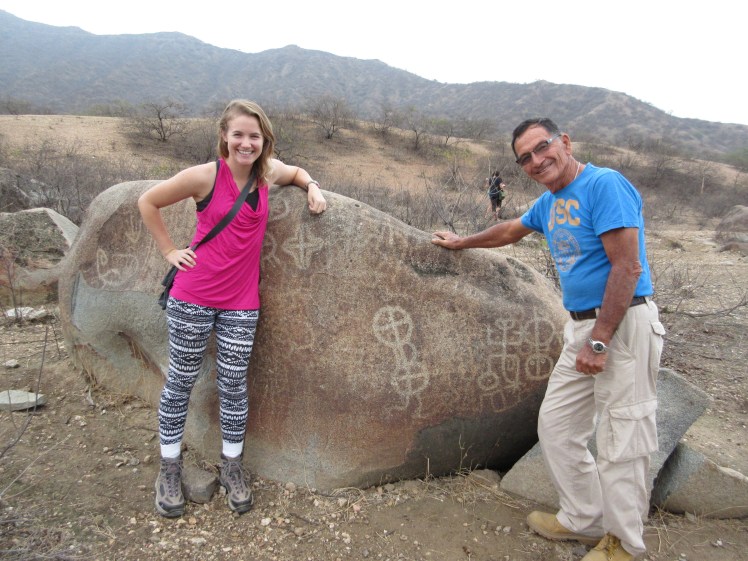
 We continued our way on the dirt road, winding around fences, houses, even a soccer field. Finally, we came across an open area, covered by large rocks. I felt my eyes grow wide with excitement as I realized we were at the ancient petroglyphs.
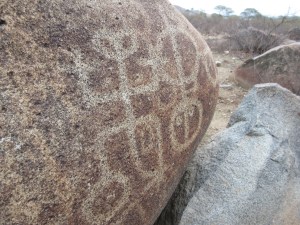
It only took a few steps from the truck to see the carvings in the rock, though faint from a distance. The designs, mostly geometrical figures, some resembling humans, others animals, were carved into the rock several millennia in the past, according to history books. There are various hypotheses about their original purpose, though most agree they were more than just art. Some relate them to the constellations, others to seasons, even fewer to extraterrestrial life.


There weren’t more than a dozen rocks with carvings, and I wondered why the area wasn’t a protected cultural area. Were there more rocks that had fallen victim to the weather and erosion? Would there be more if the Ministry of Culture protected the area?
Regardless, I found myself ever in awe of what my eyes were seeing. I imagined the history, the people that lived here. Our group spent a good amount of time among the rocks that Sunday afternoon, speculating about what the drawings were and the stories behind them.
Rich remnants of a culture long ago, so near by – not more than a 20-minute car ride from my house.


 Brittany McGee