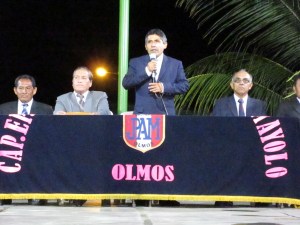
 There was no Pomp and Circumstance playing. There were no caps nor gowns. The stage wasn’t even decorated, and the only props were a table, with a repurposed banner from another event as a table cloth, and chairs. It was the first time, at least in anyone’s memory, that the secondary school Julio Ponce Antuñez de Mayolo held this kind of ceremony. It was the first Graduation Ceremony for students who had earned certificates in Mechanics, Agriculture, Electricity, or Carpentry (though the Carpentry certificates were not actually ready for this event).
Julio Ponce is the only high school in the area that offers coursework in these subjects, and many students enroll just for that reason. The first two years of secondary school, they rotate among the subjects, spending half a semester in each. In their third year, they elect which field they want to focus in, and they then split time between the classroom, learning theories, history and necessary sciences, and in the workshops, getting their hands dirty.


While these classes are mandatory for all male students, the females can also elect to participate as well. A few years ago, two sisters enrolled in and completed the coursework for Mechanics. Unfortunately, while the girls can do the classroom part during their school day, the workshops are only offered in the afternoons, when the boys study, so they have to stay late or come back after lunch. It’s one of the many downfalls to splitting the school day between sexes; the female students study from 7:30AM to 12:45PM, and the boys follow from 1PM to 6:15PM.
In a rural area, this coursework and the certificate earned upon completion are critical. Not every student has the opportunity to continue his studies, and these certificates allow him to enter the workforce and receive a much more competitive pay. Many former students come back years later asking for a certificate to prove to employers that they had studied in a specific field.
This ceremony, serious and somewhat somber, was the complete contrast of an average Peruvian “Promoción,” the combination of typical United States’ Prom and Graduation ceremonies.
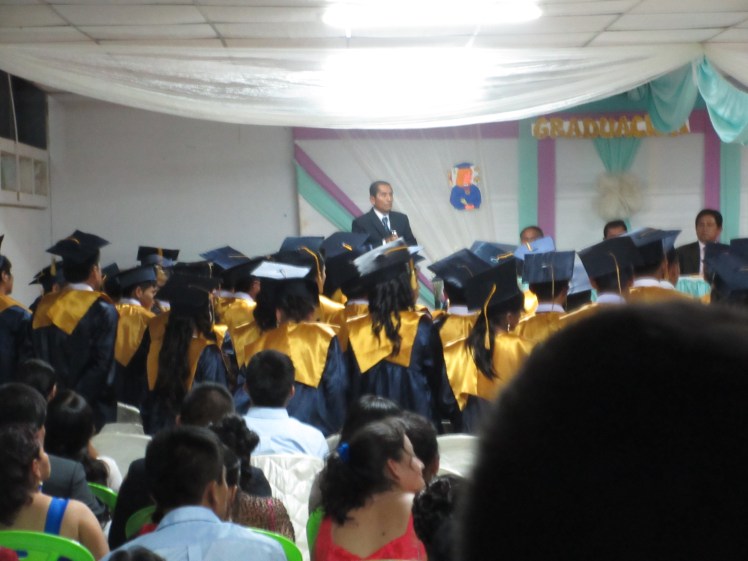
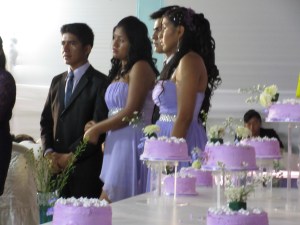 Typical “Promotions,” like the one held this year at the Technical Institute of Olmos, begin with an upbeat ceremony, where students don the normal graduation cap and gown, listen to speeches, accept diplomas, and toss their caps at the end in celebration. After the formal ceremony, students and family transition to an area set up like a ballroom with tables, chairs, and a DJ. Within minutes, they ditch the graduation garb to reveal fancy dresses and suits. Often, the young women who are graduating will all wear the same color dress and the men will wear the same color tie.
The graduating class will stand in a circle with their dates as the DJ announces their names and wishes them well. The night continues with photos, dancing, drinking, toasts and food. These events can last for hours, well into the morning.
Both events, despite their varying tones, symbolize the closing of one chapter and the beginning of another. The students are wide-eyed, full of hopes and dreams, ready to take on whatever comes next.
 Brittany McGee