The loud ringer on my Nokia brick phone echoed throughout my room. I let the catchy, yet annoying song finish as I rinsed the conditioner out of my hair. It was too early to be anyone important. As soon as the ringer stopped, indicating the call had gone to voicemail, my phone began ringing again. It was just before 7:30 in the morning, who could be calling me? I grabbed a towel, and dripping wet ran across my room to see who it was.
On the caller ID I saw my old host mom’s name. Curious, I answered the phone.
My six-year-old host-niece, Judy, was in the hospital with appendicitis.
Appendicitis, the unpredictable but potentially fatal inflammation of the arguably unnecessary appendix. If the appendix bursts, the liquids released can lead to death.
Appendicitis is most typically treated by removing the appendix. In the United States, this is a common surgery and usually, patients are allowed to leave the same day. In Peru, while it might be common, it’s apparently a much more complicated ordeal.
The night before, my host sister had taken Judy to the health post in town. The government run medical center operates on a low-budget, usually treating minor illnesses and working to prevent the spread of disease. The most action the center sees are natural births, and the staff is equipped with an entire team of obstetricians.
The doctors at the health post diagnosed Judy with appendicitis; she had pain, was vomiting, and had a fever. They rushed her to the nearest state hospital in Lambayeque, just under 100 kilometers away, or an hour-and-a-half drive, depending on traffic. They couldn’t operate until the following morning though. Once they began, she was under the knife for three hours.
While operating, they discovered that her appendix had burst, causing pus to flood her insides. In order to clean out the fluids, they had temporarily taken out her intestines. Instead of stitching her up, they left her with an open wound that would heal itself and eventually close. For the duration of her recovery, my host sister had to wash this hole in Judy’s abdomen with a special antibacterial soap and change the bandages often.
She stayed in the hospital for 5 days after the appendectomy. During this time, the hospital was very strict, only allowing one visitor at a time. Both her mother and grandmother rotated staying nights with her.
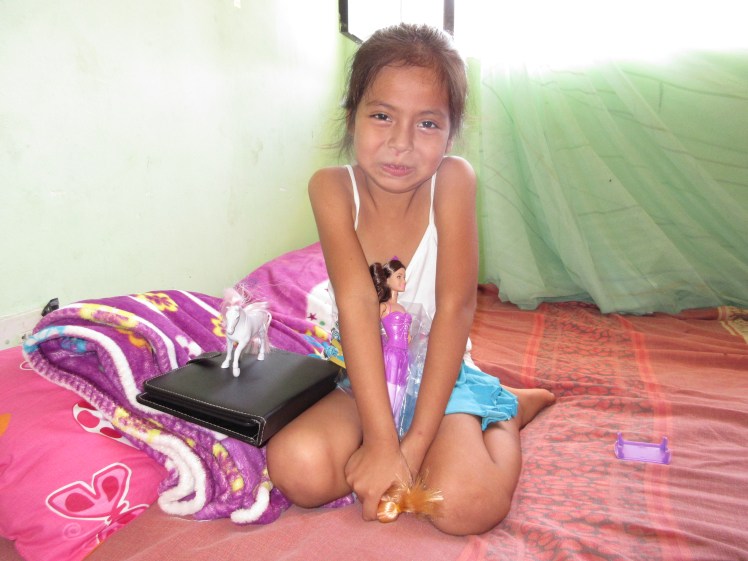
I finally was able to see Judy on her 7th birthday, 8 days after the operation. The doctors had ordered bed rest, a difficult task for a seven-year-old to keep. Her parents had bought her a tablet as a birthday gift, hoping that would occupy her time. But she still had the urge to run around with her younger sister and cousins. She also had to follow a strict diet, which we all temporarily “forgot” for her birthday.
Throughout my service here, I’ve tried to live by “things aren’t better or worse here, they’re just different.” But, when it comes to medical care, advances in medical technology, there are clear disadvantages in the developing country. Of course, the locals aren’t always aware of these advances, so operations like this appendectomy are normal; worrisome and scary, but normal.
 Brittany McGee